
Breathing 101
I am a singer and a swimmer. Both which have made me a conscious natural breather. Most of you may protest: “I know how to breath! Duh!” My response is: “No, you don’t.” The majority of people do not take their breathing habits into consideration on a daily basis. At night though, your body subconsciously takes over as you dream, unaware you revert to a natural healthy breathing pattern. The pattern is there, it’s an innate human function, now we just need to teach you the difference and fix the bad habit…easy right?
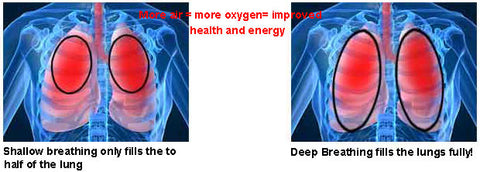
Let’s start with what you’re doing now. We are taught to stand up tall, shoulders back, tummy sucked in- tall and thin. Unfortunately, this causes the bad habit of short, shallow breathing. Shallow chest breathing delivers less air per breath into the lungs in turn constricting our blood vessels. The imbalance in turn delivers less oxygen to the brain, heart and rest of the body. Less oxygen in turn promotes fatigue, tension and tightness which all cause stress.
Shallow breathing prevents the body from getting enough oxygen. Many people fail to breathe deeply when they feel tense, which is one reason they may feel zapped at the end of a stress-filled day. “The general principles of correct breathing are to make it deeper, slower, quieter, and more regular,” . Doing so helps you force more oxygen into your cells, which slows heart rate, lowers blood pressure, and improves circulation, ultimately providing more energy. This is the ultimate goal to improving your ability to do activities like Bodysurfing, surfing, snowboarding for longer and more effectively.
The most important muscle in our breathing function is the diaphragm. The diaphragm is an arc, which lies at the bottom of the lungs. Now, take your hands off the keyboard and feel the crevice in the center of your core, just under your rib cage- see where the ribs and lungs meet forming a ^? Just below that is your diaphragm. In order for your diaphragm to work properly, we must deny social beauty and allow our tummies to stick out- just a bit. Take a deep breath in from your nose and down to the pit of your stomach, feel the air flow through your entire body. Your shoulders will remain flat, and your upper chest still. There you go! You’re putting your diaphragm to work!
In that one breath you allowed the appropriate level of oxygen to flow through your body. Practically double the amount of oxygen than shallow breathing allows. The oxygen then hits your blood, begins its circulation while stimulating higher levels of energy. Maintaining the correct amount of oxygen needed for our bodies also balances our pH levels and carbon dioxide levels. The brain, which hogs most of our oxygen, will now operate more efficiently.
What does this have to do with singing and swimming? Everything. Singing in its most basic form is breathing on pitch. Control of my breath, understanding my breath allows me to hit those notes and shatter windows. On the other hand, as an athlete, the common misuse of breathing causes you to become fatigued easily, effecting your rhythm, timing and speed. Adapting and practicing the art of natural deep breathing with your diaphragm has an immediate dramatic effect on your performance. A questionable practice of professional swimmers is using an inhaler just before a race, it helps them to shave just enough time off. The inhaler does the same thing your diaphragm does- except you’re doing it naturally without medicine. Not only have we improved our speed and performance, proper deep breathing allows for relaxation and calmness. Yoga is centered on these breathing exercises. Without proper diaphragmatic breathing, you cannot reach the desired state of deep meditation. For water sports, breathing properly is essential to a better workout and allowing you to remain in control while submerged. Through practice, your newfound awareness of your breath will allow you to practice your sports at a higher performance level.
With correct breathing practices can not only the above sports be more fun and competitive but everyday life you will have more energy and a lot more get up and go!


Share Article